
A belief in continuity.
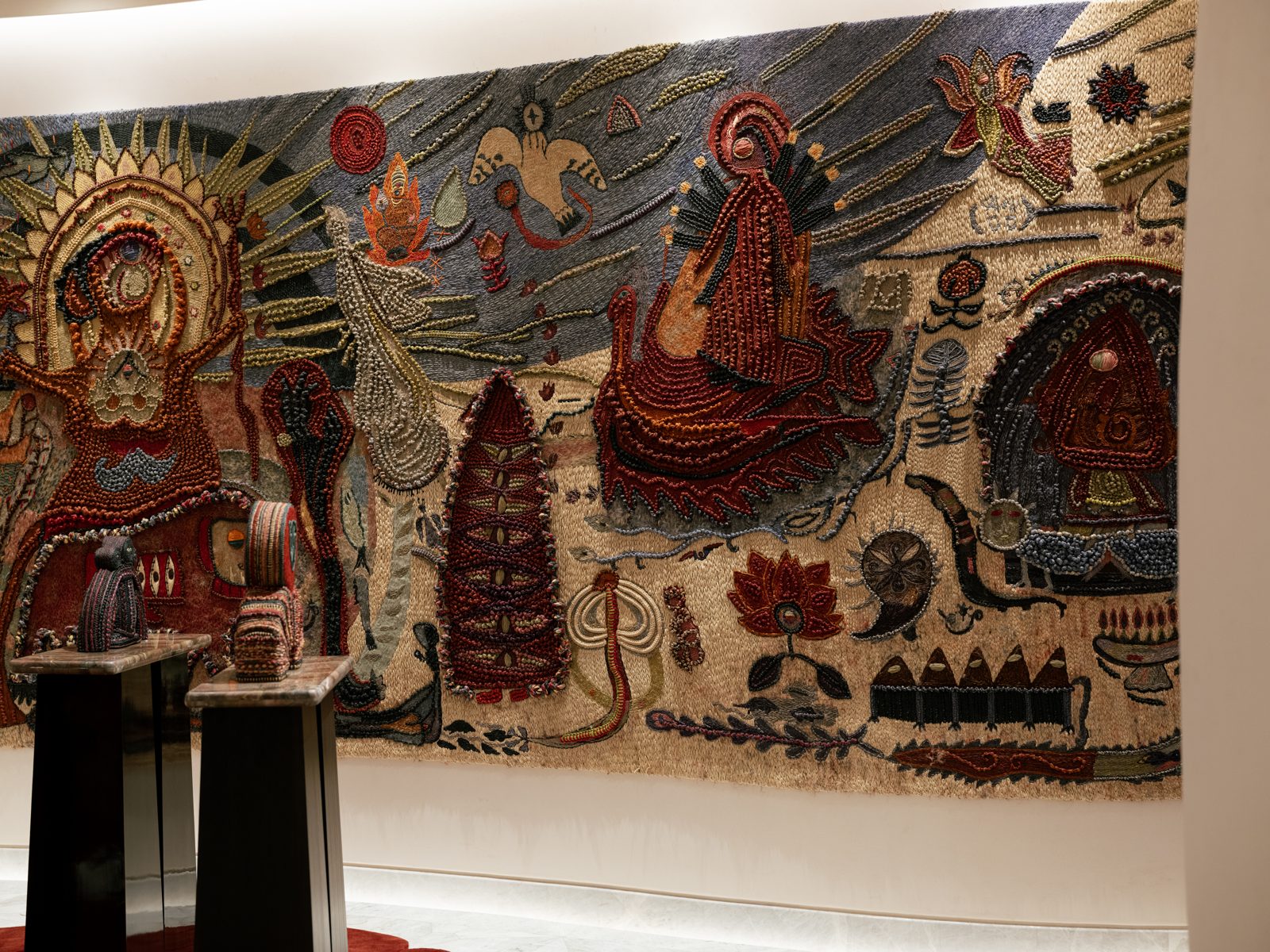
‘Palimpsest’ is the new ground floor of Botawala Chambers and the fourth pillar of the Grassroot Artisans Project (GAP).
The name
The name comes from the idea of a palimpsest: something that has been written upon more than once, where the earlier layers are not completely erased but continue to exist beneath and alongside what comes later. In architecture and geography, the term is used to describe places that accumulate layers of history, memory, use and transformation over time.
Each generation leaves something behind, while adding something of its own. The result is not a replacement of one era by another, but a place where multiple histories continue to coexist.
Botawala Chambers
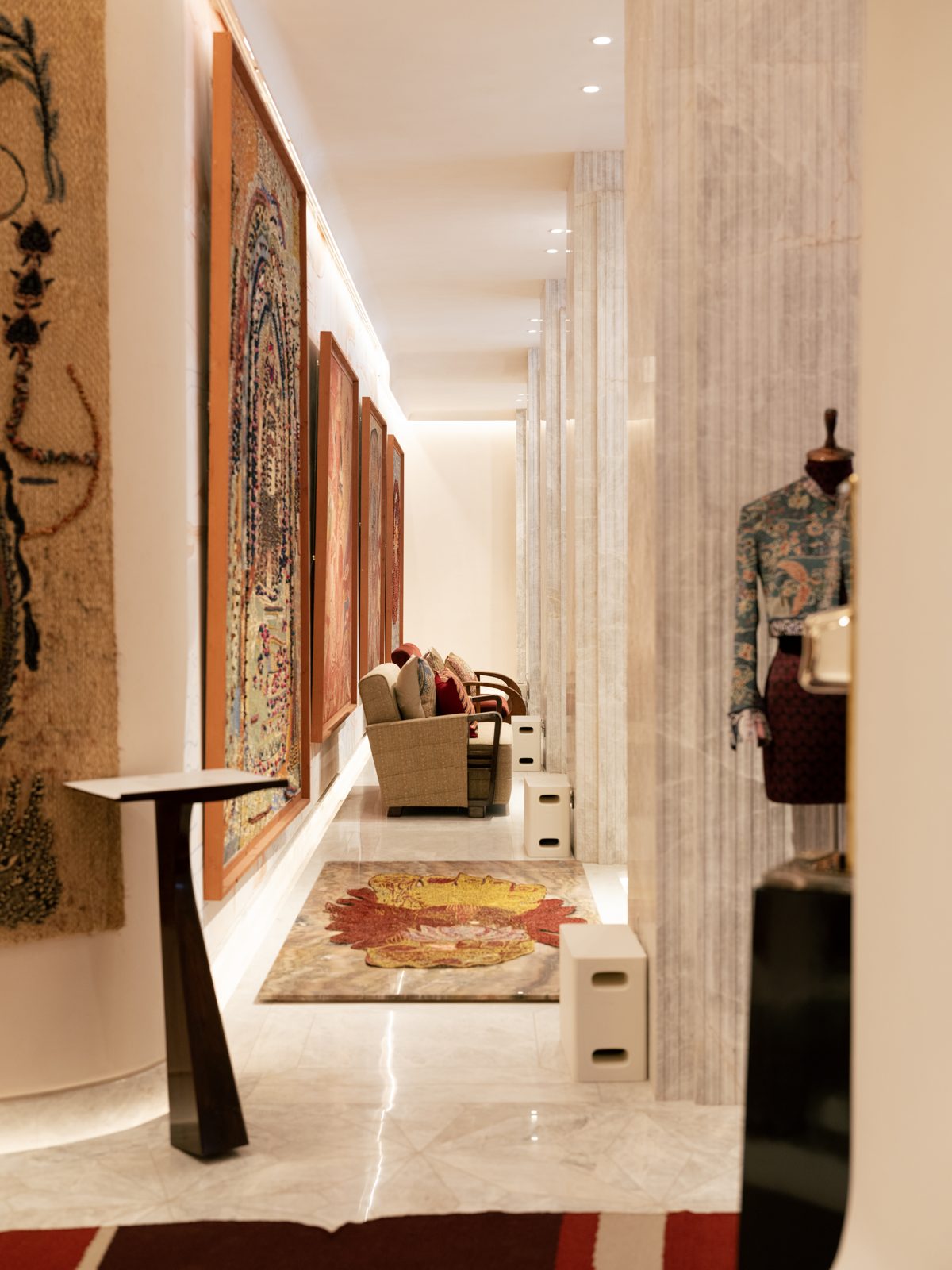
This idea felt particularly relevant to Botawala Chambers. The building carries its own history and character, and our approach has been to retain much of what already exists rather than erase it and create something entirely new. The existing architecture, its proportions, materials, details and signs of age are therefore not obstacles to the new space; they are an essential part of it.
JADE is entering an existing story and adding another chapter to it. Palimpsest is, quite literally, a new layer being added to a place that has already accumulated many layers of history.
The fourth pillar
GAP is organised around four connected pillars: Preserve Knowledge, Create New Languages, Set New Benchmarks and Share the Experience.
Palimpsest is the core philosophy of JADE — a belief that every layer of the house carries a story, a memory, a craft and a contemporary interpretation. Through Palimpsest, JADE creates a space where people can encounter these works, understand their making and engage with craft not as something preserved in the past, but as a living practice that continues to evolve.
Palimpsest is the fourth pillar because it brings these ideas into a physical and public space. It is where preservation, reinterpretation and contemporary experience come together. The ground floor of Botawala Chambers becomes a place where the history of the building can exist alongside the history of Indian craft, where archival knowledge can meet contemporary interpretation, and where artisans and their work can be encountered not as remnants of the past but as an active part of India’s cultural future.
A living environment
The space is therefore not intended to function as a conventional museum or archive. It is a living environment where people can experience craft, understand its context, discover the people behind it and see how traditional knowledge can take on new forms.
The architecture itself becomes part of this experience because it demonstrates the central idea of Palimpsest: that something does not have to be erased for something new to emerge. The old and the new can exist together, each giving meaning to the other.
JADE’s own journey
There is also a deeper connection between Palimpsest and JADE’s own journey. JADE itself grew out of the legacy of Chanakya International and has spent decades working with Indian craftsmanship while bringing it into the language of contemporary couture. GAP emerged from that same relationship with craft, taking the conversation beyond the finished garment and into the communities, techniques and knowledge systems that make it possible.
Palimpsest becomes another natural evolution of that journey. It gives a physical home to the idea that legacy is not about looking backwards; it is about deciding what is worth carrying forward and finding new ways to make it relevant.
Bombay, a city of layers
The name also speaks to Bombay itself. The city has always been shaped by layers of history, communities, architecture, commerce and culture. Old structures exist beside new ones, older neighbourhoods continue to influence newer ones, and the character of the city comes from this constant accumulation rather than from a single point in time.
Botawala Chambers is part of that larger urban palimpsest. By bringing GAP into the building, we are adding another layer to its story while allowing the earlier ones to remain visible.
What comes next
That is what we want Palimpsest to represent: a space where history is respected without being romanticised, where craft is valued without being frozen in time, and where the past is allowed to actively participate in shaping what comes next.
It is not about writing over what came before us. It is building upon it, learning from it and giving it another life.
Palimpsest is, ultimately, a belief in continuity — that the future does not have to begin by erasing the past. It can begin by understanding it, honouring it and adding to it.
Plan your visit
- The walkthrough
- 1 hour, led by a gallerist
- When
- Tuesday and Friday, 3:00 pm and 5:00 pm
- Group
- Up to 8 guests per session
- Where
- House of JADE, 128 Ballard Estate, Mint Road, Fort, Mumbai 400001
Registration is required for every guest; walk-ins are not permitted.